Friday, 14 March 2014

Four Cups of Tea


“If you want to thrive in Baltistan, you must respect our ways...The first time you share tea with a Balti, you are a stranger. The second time you take tea, you are an honored guest. The third time you share a cup of tea, you become family, and for our family, we are prepared to do anything, even die....Dr Greg, you must take time to share three cups of tea. We may be uneducated. But we are not stupid. We have lived and survived here for a long time." – Three Cups of Tea.

The last week became a little strange. First the Express Tribune Blog team wanted to ask if I will be able to do a post on various types of teas served in Pakistan, then a few of my blog readers from here and there requested if I could show them how I make my copper colored tea which somehow shows up on my fb and instagram feed quite frequently, then I met a Sri Lankan Photographer with six books under his belt who recently went to Pakistan the first time and fell in love with Lahore. He is currently working on his next book on tea drinking culture around Asia. The next post was obviously staring in my face demanding an action.

In Pakistan tea happens to bring people together. Given there is no bar culture in Pakistan, our social activities are centered around tea drinking. The emergences of coffee and tea shops in last 5-7 years have suddenly made tea drinking quite fashionable too. At offices the visitors are offered tea, in homes every guest is offered tea, travellers take a break only to have some tea, students run to cafeterias to enjoy tea and samosas during breaks. Match making happens around tea, gossip sessions happen around tea, problem solving happens around tea, mends are made with estranged friends and family over tea. No wonder Pakistan is the 3rd largest tea importer in the world. Last year Pakistan imported tea worth $610 Million. We Pakistanis love our cup of tea.

I am sharing 4 different types of teas enjoyed in Pakistan. Pakistanis have their black teas with Milk and cannot start their day without a cup of tea.

Regular Mixed Chai

Water – 1 ½ cup
Milk – 50 ml (Full fat)
Loose Black Tea – ¾ Tbsp (Tapal danedaar is my favorite Pakistani tea.)
Sugar – To taste – I like my tea sweet – 1 ½ tsps. Per cup.
Method:
Boil water in the sauce pan.
Add loose tea leaves to boiling water.
Cover and let it simmer for 1 min over low heat till the tea becomes dark orange.
Add milk to the tea. Mix and let it simmer over low flame for 1-2 mins.
Strain and serve in a cup or a teapot. In winters cardamom and cinnamon is added to the tea.


Doodh Pati – Milk Tea

This tea is the favorite of all truck drivers in Pakistan and is served at road side cafés all along the G.T Road and the Indus Super Highway. The truckers start their day with this tea which has more milk content. The tea leaves are slowly simmered in milk and water till its color turns copper. It is served any time of the day but is particularly loved when paired with a paratha-Buttered flat bread & fried egg for breakfast by not just the truckers but also by the urban working class of Pakistan.

Milk – ¾ cup – Full Fat
Water – ½ cup
Loose Tea – ¾ - 1 Tsp
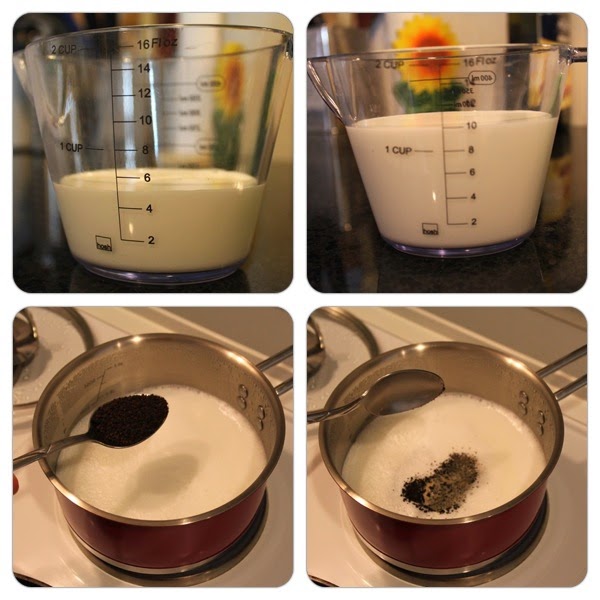
Mix water and milk together and let it boil in a sauce pan.
Add tea to the mixture, mix and cover for 3-4 mins till the Milk becomes coppery.
Strain and serve with sugar.


Kashmiri Chai – Pink Tea – Noon Cha (Salty Tea)

Pink tea hails from Kashmir and has been lovingly embraced by the rest of Pakistan. This tea is served with joy and enthusiasm in winters and during winter wedding ceremonies. No mehndi ceremony is complete without the unlimited supply of Kashmiri chai served between the dance routine intervals. Post dinner meet ups always include Kashmiri chai stops. While living in Islamabad, Munchies in F-6 was and still is my favorite Kashmiri chai spot. It was always more fun when you stuff a small car with 8 people and drive down to Munchies in afternoon or night only to have Kashmiri chai and then fight as who should pay the bill.

This tea recipe belongs to my friend Nageen Apa.
Water – 1 ½ cup
Water – 1 ½ cups (Ice cold)
Kashmiri Chai - Pink Tea – 1 Tsp - Loose Tea
Baking Soda – 1/8 of a tsp.
Milk – ½ cup- Boiled with cardamom and fennel seeds.
Almonds & Pistachios – Partially grounded. 3-4 Tsps
Sugar – to taste
Salt – to taste.

Put water in the sauce pan and add Loose pink tea to cold water. Cover it, once it starts boiling add the baking soda. Let it boil on low heat for 5 mins. The tea will become orange.
Now add ice cold water to the hot tea and aerate the mixture with a ladle for 20 -25 mins over low flame. The tea will become shocking pink.
Boil milk with cardamom and fennel seeds. Slowly add the milk to the tea. The milk will form a cloud. Mix it and let it boil for 2-3 mins. The tea will have a beautiful pink color.
Strain the tea and add to cups. Add crushed almonds and pistachios. Traditionally this tea is served with salt. In urban centers this tea is served with sugar and a pinch of salt.


Green Tea - Sabz Chai - Qehwa

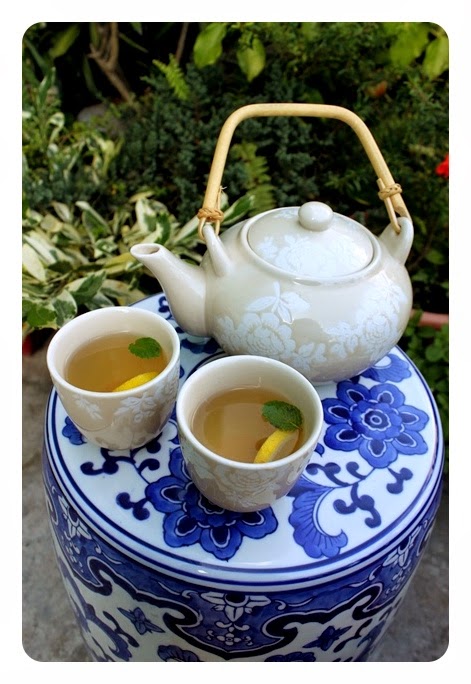
In Pakistani households every dinner and lunch is followed by green tea. Pakistan’s favorite tends to be either the Chinese Jasmine tea or Peshawari Qehwa. These teas are aimed at aiding digestion after a meal.

Jasmin Tea -1/2 Tsp Loose
Water 2 cups
Mint – 10-12 leaves
Green Cardamom – 2-3
Lemon – 2 wedges.

Add Loose Jasmin tea, Green whole cardamom and mint leaves to the teapot and pour boiling water. Let it sit for 2-4 mins. Serve with a few drops of lemon. A few prefer the tea with sugar.


Sunday, 23 February 2014

Gajjar Ka Halwa - Pakistani Carrot Halwa


While growing up in Pakistan, Gajjar ka Halwa was a winter staple in our home. Carrots in Pakistan were a seasonal item so ammi regularly made it during winter season as the new carrot crop hit the market. These days the carrots are available year around but ammi still makes carrot halwa only in winters. This halwa is calorie laden and heavy in nature as it is laboriously cooked for hours in full cream milk, ghee or butter and plenty of sugar. Not very friendly to cook or eat in summers when the mercury hits 40 degrees all across Pakistan. Winters however are short but intense. The short chilly days bring a craving for sugary tea and for buttery, sweet slow cooked halwa. Many times Abu’s friends came over to our place for afternoon tea only to have this halwa. The call to confirm a visit will have a rather specific query regarding gajjar ka halwa’s availability.  Such was the popularity of ammi’s gajjar ka halwa.

Ammi never used butter or ghee to make this halwa. The cream skimmed from the daily supply of fresh milk was collected for days. Once the desired stock of cream was available, it found itself in a  gigantic daigcha ( Cooking Pan) slowly simmering away with naturally sweet red grated carrots and sugar for hours till the cream turned in to ghee while cooking the carrots to perfection during the process. I am sharing the recipe which has some modifications due to unavailability of fresh cream.  I recently made gajjar ka halwa for a friend’s parents; the delightful feedback exceeded my expectations.    

Ingredients:
Carrots – 2 kgs (grated)
Butter -250 grams
Full Cream Milk – 1 Liter
Full Cream – 250 ml
Sugar – 1 ¼ cup
Green Cardamoms – 5-6 whole (crush them gentle to open the pods)
Garnish : Slivered Almonds – handful  &  Edible Silver Foil – 3-4 for garnish.


Procedure:
Utensil – Non Stick Cooking pan (size atleast 6-8 liter). The procedure to make halwa is pretty simple but a bit time consuming.
  1. Mix all ingredients in a large nonstick cooking pan and let it cook on the highest heat.
  2. Let the mixture boil and allow the liquid ingredients to dry. Stir regularly with a wooden spoon.
  3. As the mixture starts drying up, the boiling bubbles will jump out of the cooking pan. Protect your hands. You will need to clean your stove later.
  4. Stir the mixture with a wooden spoon till all liquid dries up and the butter comes out on the sides. Be careful not to let it burn at the bottom. Your wooden spoon will be able to stand straight once you stick it in to the carrots. (see photos)
  5. Once the halwa cools down transfer it to a serving bowl and garnish with slivered almonds and silver foil.
  6. The cooking takes about 2 hours depending on how efficient your stove is.


Thursday, 30 January 2014

Allo ka Paratha - Potato stuffed buttered flat bread

Savory Allo walay Parathay, hot sweet milky tea and winter season have an unbreakable connection in my head. The reason possibly could be that while growing up in Pakistan that’s how it used to be in our household. Waking up late on Sunday mornings meant it was late for breakfast and early for Lunch but it was hard to ignore the grumbling tummy. Wintery Sundays called for potato stuffed buttered parathas for brunch served with shami kebabs or Pakistani style spicy omelet.  

In ammi’s household all parathas were prepared either with home churned white butter or with homemade desi ghee – clarified butter. As a little girl I remember watching my Nani – Maternal Grandmother prepare butter at home quite frequently. Half of the butter was made in to Ghee for later use while the fresh white butter was kept for immediate use. I loved devouring fresh rotis with a knob of freshly churned butter rubbed on them. The leftover buttermilk - Lassi was used to make pakora karri for lunch the same day.  Nothing went to waste.

I made some Potato stuffed parathas for brunch this weekend and served them with homemade shami kebabs and Mint chutney. Sharing the recipe.

Cooking Utensil : Griddle / Tava

Dough:
Wheat Flour – 2 cups
Salt – ½ tsp
Oil – 2 tbsps
Water – Enough to knead the dough
Knead the dough with hand or in a machine. Use water as needed. Let the dough rest for an hour before making parathas. This dough will make around 16 small dough balls to make 8 parathas.


Potato Filling:
Potatoes – 1 ½ kgs – Boiled /peeled
Onions – 2 medium (thinly chopped) plus 3 tbsps. oil for frying them.
Fresh Green Chilies – 2 Medium sized (thinly chopped)
Fresh Coriander – 1 cup – chopped
Fresh Mint – 1 cup - chopped
Roasted Cumin seeds 2 tsps. (heaped)
Roasted Coriander seeds – 3 tsp (heaped) (Crushed in pestle mortar)
Anaar Dana powder (Dried Pomegranate powder) – 2 tsps. / Alternative : Dried Mango Powder – Aam choor – 2 tsps.
Crushed red chilies – 1 tsp.  Adjust to taste if you want more.
Salt – 1 ½ tsp (heaped) – Adjust to taste if you want more.
Butter – 200 gms (Melted)


Method:
  1. In a frying pan, take 3 tbsps. of oil and fry the chopped onions till translucent. Do not brown. Remove on a kitchen paper. Let them cool down.
  2. Mash the potatoes and add all spices, cooked onions and herbs to it. Mix and set aside for an hour.
  3. Put the griddle on the stove on the highest heat.
  4. Make 16 balls of the dough. 2 balls will make one paratha.
  5. Roll out 2 dough balls in to round flat bread at a time.
  6. Remove excess flour from them.
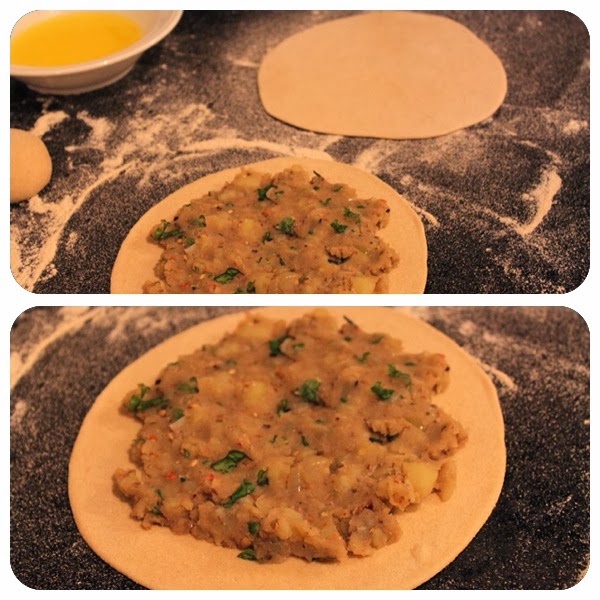
  7. Put 3-4 heaped tbsps. of mashed potatoes mixture on one rolled out dough. Use your fingers tips to spread the potatoes evenly, leaving about ½ inch from the corners.
  8. Place the second rolled out flat bread dough on top of the stuffed one. You can lightly wet the corners of the stuffed dough by dipping you fingers in water. This helps the second flat bread to stick to the first one firmly, ensuring it does not open as it is cooked and flipped on the griddle.
  9. Press the two rolled out flat breads dough together firmly with your hands and even the stuffing. Use a rolling pin to flatten them. The paratha will increase in size as you roll it.
  10. Gently lift it in your hands and shed off excess flour. Flip it on the hot griddle on the highest heat.
  11. Spoon around 2 -3 tbsp. melted butter on the top side and spread it. Wait for about a minute before flipping it over.
  12. Butter the other side the same way and cook both sides till the paratha looks gently golden brown and crisp and the corners are completely cooked. Reduce the heat as you cook or the butter will burn and smoke the kitchen.
  13. Remove the paratha from the griddle on to a kitchen paper. Cut them in 4 pieces if you want and serve hot with chutney and tea.
  14. Wipe the griddle with a kitchen paper after making each paratha.


Monday, 25 November 2013

Daal Maash- Maash Lentil

Daal Maash was abbu’s favorite. Ammi used to cook it frequently during winter days. Fast forward many years, my husband cannot get enough of daal Maash. I love all Lentils but somehow I never quite liked daal Maash. Daal Maash has a very distinct nutty flavor which my taste buds could not appreciate as a kid. There were many foods many of us did not appreciate as kids, growing up changed that for most of us.  Daal Maash, French beans and Spinach were less favored foods for me back then.

This particular Daal Maash recipe belongs to my Mother-in-law. Her simple technique brings out the best of Maash daal’s flavor. I remember the left over Maash daal was always made in to a paratha the next morning for breakfast. The cooked lentils were stuffed between two layers of flat bread and cooked with desi ghee (clarified butter) or butter and eaten with copper colored sweet chai – tea as the mercury hovered around freezing point. I never said no to maash lentil paratha. I still make a paratha out of left over Daal Maash the next day and have it with sweet chai like old times. Somehow it transports me back to ammi’s house in winters. This is served with Home made Chappati - Flat bread. Here is the recipe.

Ingredients:

Maash Lentil – ¾ cup – soaked overnight
Onion – 1 Large – chopped in small cubes (save 1/4th for Tarka- Oil tempering)
Oil – 2 Tbsps.
Fresh Tomato Puree – ¾ cup
Fresh Ginger & Garlic paste – 1 tsp. (Heaped)
Cumin seeds – 1 tsp. (heaped – gently crushed in pestle mortar)
Whole coriander seeds – 1 tsp. (Heaped – Gently crushed in pestle mortar)
Whole dried chilies- 2
Salt – ¾ tsp. (taste and add more if needed).
Chili powder – ¾ tsp. (taste and add more if needed).
Turmeric – ¼ tsp.
Cumin powder – ½ tsp.
Water – 1 cup
Dried Kasuri Methi (Dried Fenugreek Leaves) – 1 tsp. (Heaped)
For Tarka –Oil tempering:
Oil – 1 Tbsps.
Onion – ¼ of a large onion – thinly sliced.
Ginger – 1 Inch Julienne cut
Green chili – 1 medium – chopped
Fresh Coriander – chopped (for garnish).

Method:
  1. Heat the oil in a medium sized pan that should have a lid. Add onions and let them turn translucent. Do not brown them.
  2. Add crushed Cumin seeds, crushed coriander seeds and whole dried chilies. Cook for 1 minute on medium to high heat.
  3. Add drained Maash Lentil. Cook on high heat till the water dries up.
  4. Add tomato puree, ginger-garlic paste, salt, chili powder, turmeric and cumin powder. Mix and cook for about one minute.
  5. Add one cup of water and let it come up to a boil. Once it starts boiling, reduce the heat to a simmer, cover with the lid and let it cook for 45 mins. Check after 20-25 mins. Lentils in different places take different amount of time to cook. In Pakistan Maash lentil is cooked in about 25-30 mins. In my current location I need about 40-45 mins to cook it despite soaking it overnight. Keep an eye on it as it cooks.
  6. Once the water has dried up and Lentil has cooked completely, add the dried Kasuri Methi to it and mix. Switch off the stove.
  7. Now prepare the tarka. Heat the oil in a small frying pan and fry onions till gently golden. Add Julienne ginner and green chilies to it. Add it to the lentil. I had fished the fried items and added them to the lentil leaving out the oil in the frying pan to control the calorie count. If you are not worried about calories then feel free to add the oil as well.
  8. Garnish with Fresh green coriander and thinly chopped green chili.

Maash Lentil is paired beautifully with fresh roti/ chappati and Mint chutney with a tomato, cucumber, onion salad. Don’t forget to make a paratha out of the left overs the next day and have it with sweet chai.