Sunday, 13 October 2013

Mutton Dum Piyaza

Each Eid reminds me of the happy Eids I celebrated as a kid at my maternal grandparent’s house in Rawalpindi some 20 or more years ago. It was the hustle and bustle a day before Eid which I found more exciting. Being the eldest grandchild, I believed my job was the most important one.  Which was to make sure that the Mehndi – Henna was prepared well in advance by nagging ammi & khalas (maternal aunts).  Mind you this was not the instant cone mehndi era. A lot of time and effort was put in preparing dry Mehndi with brewed tea and mustard oil. It was left to sit for hours before it could be applied on the hands.

The kitchen was the most happening & exciting place where Haleem and Kheer was prepared a day before Eid. 6-8 kilos of Kheer – Rice pudding was prepared on the outdoor firewood stove as the big cooking pan - Daighcha (Similar to a Giant stock pot) was too big to fit on the conventional gas stoves in Barri Ammi’s (Nani – Maternal Grandmother) kitchen. The Kheer would take 5-6 hours of physical labor to become thick, creamy and gently pink in color. The trick to perfect Kheer was to stir it constantly for 6 hours to ensure it does not get burnt at the bottom of the pan spoiling the taste and smell of Kheer. That much labor was not one man’s job. So ammi, Khalas, mamoos(maternal uncles), sheeda-the cook, Shayra- The cleaner, Jan Bhai – The driver and Mali Baba –the live in Gardener all took turns to stir the kheer for 6 hours. Barray Abbu(Nana – Maternal Grandfather) was the final authority & quality control to sign off on the Kheer before it was cooled, ladled in to serving bowls and decorated with silver leaf, slivered  almonds and pistachios.  

Those who contributed their muscle power in stirring the Kheer were the first ones to be offered to enjoy the Kheer on Eid day. I find myself smiling as I recall those cherished Eids I had spent at my grandparents’ house. Technically I should be sharing the recipe for that very Kheer but ET had asked me to write a savory, meaty post for Bakra Eid. Hence I am sharing the Mutton Dum Piyaza recipe from ammi’s Eid Menu which was a favorite of everyone and befits Eid Dastarkhuan perfectly.  The expat Pakistanis in Far East like me will celebrate Eid on Tuesday- 15th.  Eid Mubarak to everyone back home. Please pray for peace, stability and harmony to return to Pakistan and let’s not forget to include the less fortunate ones in our celebrations.

Cooking Utensil – Pressure cooker & a nonstick pan with lid. This dish is served best with Naan.

Ingredients:

Mutton – ½ kg
Onions – 3 Large - sliced
Tomatoes - 4 medium sized– chopped
Ginger paste – 1 tsp. Heaped
Garlic Paste – 1 Tsp. Heaped
Oil – 5 tbsps. (I prefer sunflower oil)
Cinnamon Sticks – 2 (1 ½ inch long)
Black Cardamom – 2 whole
Roasted cumin seeds (zeera) – 1 tsp. (Heaped - slightly crushed in pestle mortar).
Roasted whole coriander seeds – 1 tsp. (Heaped- slightly crushed in pestle mortar)
Dried red chilies whole – 4
Cloves – 6
Black Peppercorn – 8-10 (whole)
Salt – 1 tsp. (adjust to taste)
Water – 1 ½ cup
Garnish for Dum (steaming):
1 Large Onion – sliced in rings
2 Medium Tomatoes – sliced in rings
1 green chili thickly cut.
Ginger –Julienne – 1 tbsp.
Oil – 2 Tbsp.
Roasted Cumin seeds – 1 tsp. Heaped – crushed.


Method:
  1. Heat 5 tbsps. of oil in a pressure cooker and add the mutton. Sauté it on high heat for 3-4 mins till it changes color on all sides.
  2. Add ginger/garlic along with all the whole dried spices to the meat (Cumin, coriander, cloves, cardamom, peppercorns, and cinnamon). Fry for 1-2 mins. Don’t let the garlic burn.
  3. Add onions and fry them till they are translucent. No need to brown them. Deglaze the pan as per need with ¼ cup of water and cook the onions further. Ensure nothing gets burnt at the bottom.
  4. Add salt and chopped tomatoes. Cook further for 1 minute. Add about a cup of water. Mix and put on the lid to pressure cook the meat. The meat I use takes about 15 mins of pressure cooking resulting in 3/4 of the meat tendering done. The rest is cooked in dum(steaming).
  5. Once the pressure cooking has been done, remove the lid and check the tenderness of the meat. Once the meat is tender to your liking then proceed with shifting the meat and the liquid in to a nonstick pan to dry the water over high heat.
  6. Watch out for the aggressive boiling bubbles jumping out of the boiling liquid. It will splatter on the stove and hands. Protect your hands, stove can be cleaned later.
  7. Once ¾ of the liquid has dried, add 2 tbsps. of oil and cook further till all the water dries up and the oil comes out on the sides.
  8. Lower the heat to the minimum. Now add layers of sliced onions, green chilies, Julienne ginger & tomato slices. Also sprinkle the crush cumin seeds.
  9. Close the lid lightly and let the raw vegetables steam cook over low heat for 15-20 mins.
  10. Open the pan and mix it. Serve it with a garnish of fresh coriander and green chili.
  11. It pairs beautifully with Roghni Naan.


Sunday, 6 October 2013

Chicken Haandi


My recent work trip to Pakistan took me to Multan (Located in the South of Province Punjab), a city I have only passed through as a kid while my father was posted at Bahawalpur many years ago. So I took this opportunity to go all touristy in Multan and did some serious sohan halwa, multani chappals, blue pottery shopping binging. What joy! 

As a kid I remember our house always had a continuous supply of Multan’s famous sohan halwa and Kushaab’s dooda. It was regularly served with tea & shami kebabs to the guests visiting us. Somehow these two items were so much part of my childhood while growing up in Pakistan. Which explains why I bought a ton of sohan halwa from Multan.  I also visited the shrines of Bahauddin Zakaria & Shah Rukhn- e – Alam and was in awe of the architectural marvels these shrines are despite their age. The city indeed was a pleasant surprise. I also ended up having the best ever Karahi at Ramada Multan. I am still in the process of reverse engineering it and will share the recipe if I succeed. I look forward to going back to Multan and enjoy some more sohan halwa in near future.

On my arrival at my base camp - Rawalpindi, my mother in law had prepared an incredibly delicious chicken Haandi for me. She was kind enough to show me this simple and delicious recipe in her kitchen. This dish is cooked in a traditional Pakistani clay pot called Haandi. This can be served with Chappati - Flat bread or Naan.

(I have not used clay haandi- traditional Pakistani clay pot for cooking this recipe simply because of the difficulty in photographing the food inside a haandi.)

Ingredients:
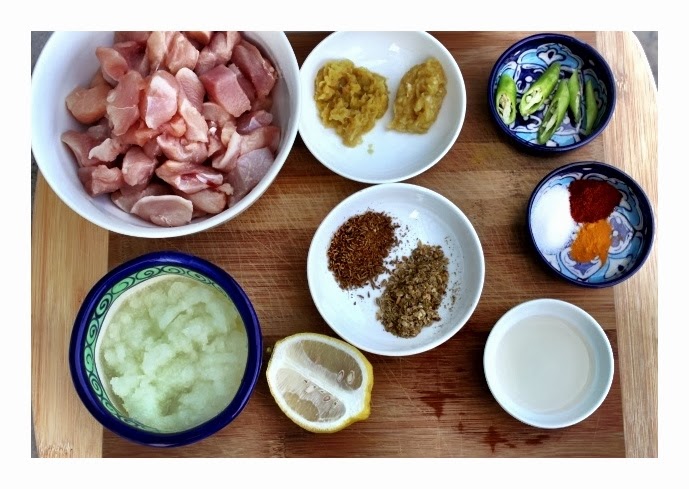
Chicken – ½ kg (boneless)
Onions – 1 cup (make a paste in blender)
Garlic – 1 tsp. (paste)
Ginger – 1 tsp. (paste)
Oil – 4 Tbsp.
Salt – ½ tsp. (adjust to taste)
Chili powder – ½ tsp. (Adjust to taste while keeping in mind the use of green chilies in the recipe)
Cumin – 1 tsp. (crushed)
Dried whole Coriander – 1tsp (crushed)
Water – ½ cup
Lemon Juice – ½ lemon (large)
White Vinegar – 1 Tbsp.
Green Chilies – 1
Fresh Coriander for Garnish


Method:

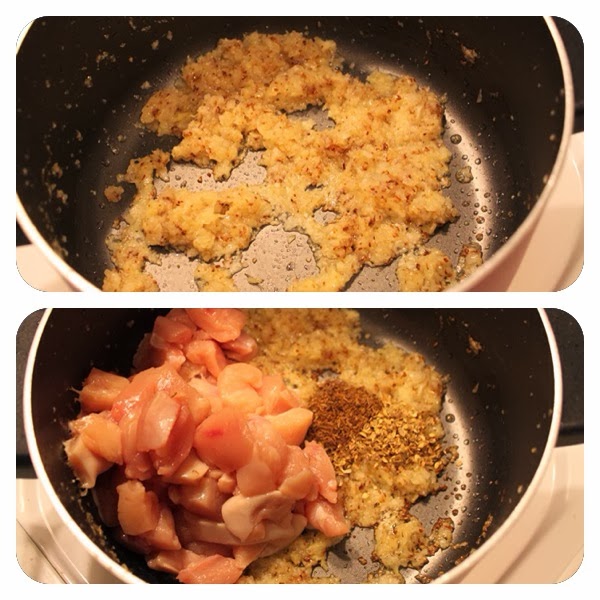
  1. Heat the oil in a pan & add the onion paste.
  2. On high heat let it change color to pink. It will take 5-7 minutes.
  3. Now on medium heat add half of ginger & garlic. Also add cumin & coriander. Cook for another 1-2 mins.
  4. Add boneless chicken, half of the green chili, salt, red chili powder, remaining ginger/garlic and mix. Cook till it chicken changes color. Lower the heat.
  5. Now add ½ cup of water and let the chicken simmer for 1-2 mins.
  6. Now add the vinegar and lemon juice. Mix and cook till the water reduces to half, the oil has separated on the side and the smell of vinegar has disappeared from the food. It will take about 5-7 minutes on low heat.
  7. Garnish with fresh coriander leaves and green chilies. Pair it with Tandoori Roti and Mint Chutney.


Thursday, 15 August 2013

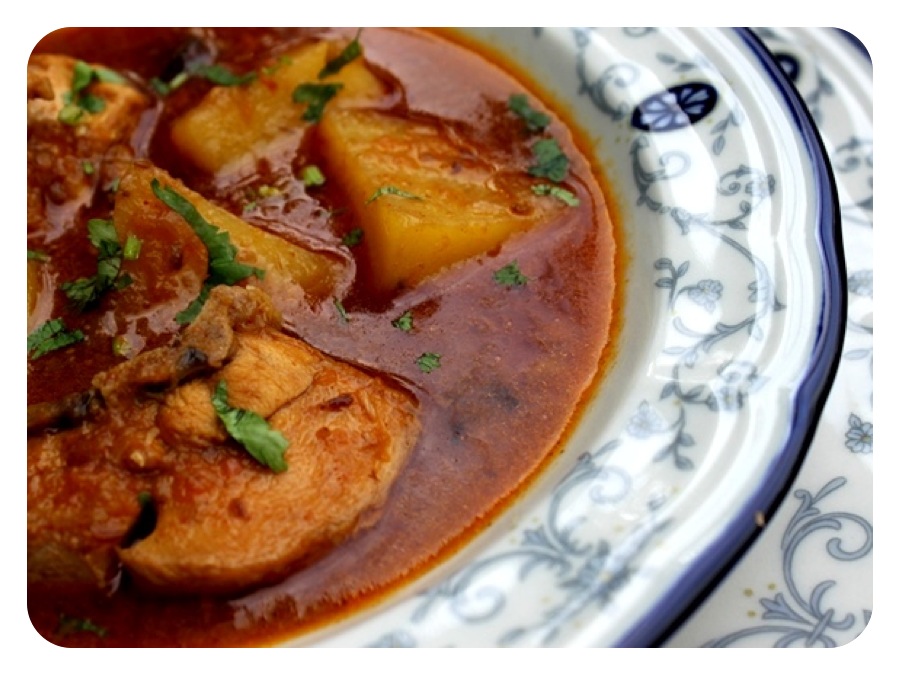
Kashmiri Chicken Curry


During the long summer school holidays in Pakistan, as we roamed around the beautiful Northern areas of Pakistan for summer vacations – Muzaffarabad – The capital of Pakistan’s side of Kashmir would be one of the stops. Hotels were less in number in that area back then so the government guest houses were the place to stay on such trips. Regardless of which part of northern areas one went, the government guest houses would have one thing in common – A Kashmiri cook or Khansama as it’s called in Pakistan. Those trips were the reason for my delicious encounters with Kashmiri chicken curry. The curry was eaten with equally divine steaming hot wood oven cooked tandoori rotis. One could smell pine trees in the rotis. For most of us who have had Kashmiri cooks at home, we have eaten Kashmiri chicken curry at homes many times. I learnt to make it from our Kashmiri cook as well. 

I have often wondered why Kashmiri men were such good cooks. I haven’t quite found the answer yet. The same Kashmiris from Mirpur who had gone to UK as labor in 1960-70s to fuel UK’s textile revolution have ended up establishing UK’s most famous desi food restaurants and Pakistani food franchises. I must also acknowledge that we Punjabis are utterly grateful to the Kashmiris for introducing us to the most amazing Shabdegh – Slow cooked sweet & savory lamb & turnip curry. This dish is cooked in a clay pot sealed with dough over low heat all night long.  In the morning the meat is falling off the bone and melts in the mouth!

This post is to remember the beauty of our Kashmir, the smell of pine trees, the long summer holidays on road and the divine curry that makes me smile every time i think about it. 

Here is my version of Kashmiri Chicken Curry. I love to serve it with Naan, chappati - Home made flat bread or Rice pulao.  

*Cooking Utensil – Pressure cooker.

Ingredients
Chicken – 8-10 medium sized pieces – 1 kg
Onions – 3 large - chopped
Tomatoes – 1 cup fresh puree
Ginger/Garlic – 1 tsp heaped.
Potatoes – 3 medium sized – medium diced
Oil – 4 tbsp
Cinnamon – 3 1 inch sticks
Black Cardamom – 2-3 whole
Cloves – 5-6 whole
Cumin seeds– 1 tsp heaped – lightly crushed in pestle mortar (I dry roast my cumin seeds)
Coriander seeds– 1 tsp heaped – lightly crushed in pestle mortar (I dry roast my coriander seeds)
Chili powder – ½ tsp
Coriander powder – 1 tsp
Turmeric – ¼ tsp
Salt – 1 tsp – adjust to taste if needed more.
Water - 3 cups.
Roasted Cumin seeds – ½ tsp crushed for dusting on curry
Fresh Coriander – chopped handful for garnish.

Method:
  1. On medium heat, warm the oil in a pressure cooker and gently fry the onions. A pressure cooker saves time in breaking down the onions in to a paste. Once the onions are gently browned, add a cup of water and give it a pressure for 5 mins. 
  2. The same can be done without a pressure cooker as well but it will take more than 30 mins. The water is added in intervals to break down the onions. Then it is dried, onions are mashed up and then the process is repeated again till the caramelized onion paste is formed.
  3. Going back to the pressure cooking: Once the pressure is done, add whole cloves, cinnamon & cardamom to the water and onions mixture. Dry the water completely and mash the onions till it becomes a paste.
  4. Now add chicken, tomato paste, ginger/garlic paste, dried coriander seeds, dried cumin seeds, salt, chili powder, coriander powder & turmeric to the onion paste.
  5. Cook on medium heat for 5-8 mins till the chicken changes its color and the liquid from tomato puree dries up. The oil should separate from the gravy.
  6. Now add diced potatoes and cook further for 2-3 minutes on medium heat. Don’t let the onion paste burn.
  7. Add 2 cups of water to the mixture. Mix and let it boil on a high heat. Once boiled, reduce the heat to a gentle simmer(cover the pan) and cook for 25 mins till potatoes are thoroughly cooked, curry has thickened and the oil starts floating on the top of the curry. If the curry has thickened too much for your taste then add ½ cup of hot water and let it simmer for 2-3 mins.
  8. I love to add a dusting of roasted & crushed cumin seeds on the curry along with fresh chopped coriander leaves before serving.
* If you don't have a pressure cooker then let the onions and garlic ginger cook in oil, as it changes color add a bit of water and make a paste of it in liquidizer. Pour it back in the cooking pan and dry the water till oil comes out on the sides and follow the step # 3 on wards.


Monday, 15 July 2013

Allo Anday ki Bhujia - Potato Egg Masala


Arrival of the holy month of Ramzan disrupts ones routine. From eating to sleeping to socializing, everything changes for muslims. Muslims in different parts of the world fast for 30 days of the 9th month of the Islamic Calendar. In some places the daily fast is as long as 19 hours or more, while in other places fasting period is around 13 hours a day. This routine changes our diet and the time of taking meals.  

Allo Anday is a simple dish cooked almost daily in Pakistani households during the month of fasting and eaten during the Sehri (3rd part of the night when Muslims begin their fast) with chappati, toast or paratha accompanied with yogurt. It has carbs and proteins and has far less spice than the regular curries hence it is preferred by many like me. My fridge never runs out of allo anday ki Bhujia during ramzan. During the regular days i eat this bhujia with toast and chai for brunch. Once in a while it also becomes part of a sandwich for my lunch box. 

The recipe i am sharing here belongs to my maternal aunt – Khala who has earned her culinary repute for making “The Best Allo Anday ki Bhujia” in the entire family. 

Here is my contribution to this underrated and humble dish!

Ingredients:
Potatoes – 450 gms (diced in small cubes. See the picture)
Onion – 1 small (finely chopped)
Eggs – 3 Large (lightly beaten)
Ginger/Garlic paste – 1 tsp (heaped)
Fresh Tomato paste – 1 cup
Green Chili – 1 medium sized
Oil – 4 tbsp
Cumin (whole) – 1 tsp (Roasted & crushed lightly in pestle mortar)
Coriander (whole) – 1 tsp (Roasted & crushed lightly in pestle mortar)
Whole dried chilies – 4 small or 2 large
Chili powder – ½ tsp
Coriander powder – 1 tsp
Turmeric – ¼ tsp
Salt – 1 tsp
Fresh Coriander for Garnish


Method:
  1. In a cooking pan (the pan should have a lid) heat the oil and add chopped onions, cumin seeds, coriander seeds and dried whole chilies.
  2. As soon as the onions become translucent (do not brown the onions), add the small cubed potatoes.
  3. Mix them on medium to high heat for 3-5 mins till a few sides of potatoes start becoming translucent.
  4. Add tomato paste, ginger/garlic paste, salt, chili powder, cumin powder, turmeric powder and green chilies. Mix it. Cover and cook for 2-3 mins on medium heat till the liquid from tomatoes has reduced.
  5. Add the beaten eggs on top of the potatoes. Do not mix. Cover it for 25 mins and reduce the heat to low.
  6. After 10-12 mins, remove the lid and mix the cooked egg thoroughly. Cover the pan again for 15 mins. The potatoes should be done in about that time. If the potatoes are not done after 25 minutes, let it cook further on very low heat till potatoes are done. Do not add any water.
  7. Once cooked, remove from the heat. Garnish with chopped fresh coriander and serve with chappati.